
Are you in two minds about your martial art?
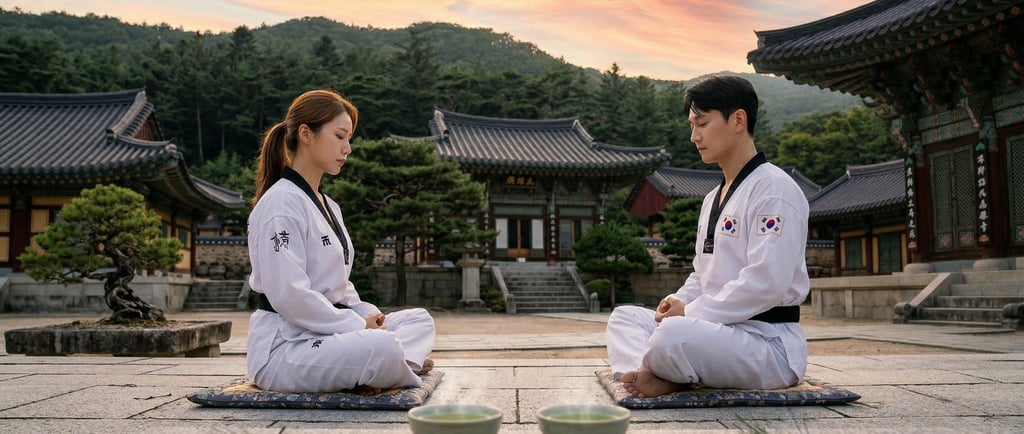

Are you torn between continuing your current martial arts journey or exploring something new? Have you ever doubted your progress, or struggled to stay motivated in your training?
Here’s Why Your Subconscious Mind Holds the Key
Have you ever felt like your mind is split in two? Like one part of you really wants to go for a goal, whether it’s mastering a new martial arts move, starting a creative project, or just making healthier choices, while the other part holds you back with doubts or distractions? Maybe part of you wonders, "Can I really do this?" or "What if I mess up?" Meanwhile, another part is just hungry and thinking about dinner.
If this rings a bell, you’re not alone. This inner tug-of-war is something almost everyone experiences. I call this arguing with my inner roommate and as a mindset coach, I see this happening to everyone. And the truth is, there’s a powerful reason behind it: the way your conscious and subconscious minds work and sometimes don’t quite agree.
But don’t worry. Understanding this can help you make peace with that inner conflict and even use it to your advantage. The secret? Mindfulness and learning to work with your subconscious mind, the powerhouse behind most of what you do.
Let’s dive into this idea and see how you can use it to feel clearer, more focused, and more in control of your martial art and your life!
Your Mind: Captain vs. Engine Room
Let’s imagine your mind as a big ship sailing across the ocean.
The conscious mind is like the captain on the bridge. This is the part of your mind you’re aware of right now. It’s where your thoughts, feelings, and decisions happen. The captain decides what to eat, what to say, and where to go.
But below deck is the subconscious mind, the massive Engine Room powering the whole ship. It runs in the background, handling everything you don’t have to think about: breathing, your heartbeat, memories, habits, and emotions.
Here’s the interesting part: while the captain (your conscious mind) can only focus on a few things at a time, the Engine Room (your subconscious) is processing millions of pieces of information every single second. In fact, about 95% of your thoughts happen below your awareness, in the subconscious.
That’s why sometimes it feels like you’re “in two minds.” The small Captain tries to steer the ship in a new direction, but the powerful Engine Room keeps running old routines and habits.
Real-life example: A martial arts instructor might consciously want to improve a new technique or teach a complex move. Their conscious mind is focused and determined. But during practice, their subconscious mind often defaults to older, familiar movements that feel safer and more comfortable.
Overcoming this requires patience and mindfulness, learning to notice when the old habits kick in and gently guiding the body toward the new technique until it becomes automatic. The good news is, habit from the French word for clothes, act like clothing for our personalities and like clothes they can be changed!
Why It’s Hard to Change
Your conscious mind, the captain, can only handle about 40 to 50 bits of information per second. It’s good at logic, planning, and willpower, but it gets tired quickly.
Your subconscious mind, the Engine Room, processes around 11 million bits per second. It stores everything you’ve ever experienced and runs your habits automatically. It’s incredibly efficient but resistant to change because it’s built for survival and comfort.
So when you try to learn a new skill or break a bad habit, it’s like the captain trying to steer the ship against the massive power of the Engine Room’s old ways. No wonder change feels so hard!
Real-life example: A dojo owner wants to build a new daily habit of checking emails only twice a day to stay focused on teaching and running the school. Their conscious mind plans it out carefully, but the subconscious habit of constantly checking emails for quick distractions and instant gratification keeps pulling them back. The battle to stay focused is very real!
What Is Mindfulness and Why Is It So Powerful?
This is where mindfulness comes in. Mindfulness is about being fully present and aware of what’s happening inside you and around you, without judging or trying to push anything away.
It’s not just a trendy buzzword. Science shows that practicing mindfulness regularly can change the structure of your brain. It calms the Amygdala, the part of your brain that triggers fear and stress, and strengthens the Prefrontal Cortex, where your conscious mind lives. This means mindfulness helps your Captain work better, with more control and less burnout.
By becoming more aware of your thoughts, feelings, and body sensations, you start noticing the patterns your subconscious mind runs on. When you catch those old habits or negative beliefs in action, you can gently choose not to feed them anymore.
Real-life example: A martial artist practicing mindfulness notices that before sparring matches, old fears or doubts arise automatically. Instead of reacting with stress, they observe these feelings calmly, allowing them to stay focused and perform better.
How Mindfulness Helps You Rewire Your Subconscious
You can also think of your subconscious mind as a garden filled with plants representing your habits, beliefs, and emotions. Some plants, like doubt and fear, may be weeds that have taken over because you’ve watered them for years without realizing it. Mindfulness is like shining a light on those weeds, so you see them clearly.
Once you’re aware, you can decide to water the plants you want to grow instead, like confidence, calm, or determination.
Here’s what mindfulness does for your subconscious:
Shrinks the Fear Centre: Mindfulness reduces the size and activity of the Amygdala, making you less reactive to stress and fear.
Strengthens the Thinking Brain: It builds up the Prefrontal Cortex, helping your conscious mind make better decisions.
Creates Space Between Stimulus and Reaction: You stop reacting automatically and start responding with intention.
Builds New Neural Pathways: With practice, mindfulness helps form new habits and ways of thinking that support your goals.
Real-life example: Someone struggling with procrastination might use mindfulness to notice the urge to avoid work without immediately giving in. Over time, this awareness creates space to choose a different, more productive response.
Visualization: Talking to Your Subconscious in Its Own Language
Your subconscious doesn’t understand words the way your conscious mind does. It speaks in images, feelings, and sensory experiences.
That’s why visualization is so powerful. When you vividly imagine yourself succeeding, like nailing that martial arts move, passing grading, or feeling calm in a stressful moment, you’re sending a clear message to your subconscious and increasing your mind body connections.
Scientists have found that mentally rehearsing an action activates the same brain areas as physically doing it. So, when you “practice” in your mind, your subconscious starts to believe it’s real and gets ready to support it.
Don’t just picture the goal, use all your senses and in your imagination, feel the texture, hear the sounds, smell the surroundings. This rich sensory input is the “code” your subconscious understands.
Real-life example: A public speaker pictures themselves walking confidently onto the stage, seeing the audience, hearing the applause, and feeling calm. This practice helps reduce anxiety and improves actual performance.
Beyond Affirmations: Changing Your Identity to Rewire Your Brain
You’ve probably heard the phrase, “Neurons that fire together wire together.” It means the more you repeat a thought, the stronger the brain pathway for that thought becomes.
Affirmations, positive statements like “I am confident” or “I handle challenges with calm”, can be helpful, but they’re not enough on their own. For real, lasting change, you need to go deeper and shift how you see yourself, your identity.
Simply repeating words won’t work if your mind still holds onto old beliefs about who you are. Instead, you must start acting and thinking as the person you want to become. This means building new habits, making choices, and seeing yourself differently every day. In fact one of my favourite saying is, ‘In life, you don’t get what you want, you get who you become’
For example, if you want to be someone who stays calm under pressure, it’s not enough to say, “I am calm.” You need to begin noticing moments when you handle stress well, celebrate those wins, and gradually build the story in your mind: “I am the kind of person who stays calm and collected.”
When your actions and beliefs align with your new identity, your subconscious mind begins to accept this new version of you as the truth. That’s when real transformation happens, not just in your thoughts, but in your behaviours and results.
This deeper identity shift helps your subconscious rewrite its “programs,” making new habits feel natural and effortless over time.
Real-life example: A martial arts instructor who always struggled with self-doubt about teaching advanced techniques starts to see themselves as a skilled, confident teacher. They focus on small teaching successes, hear positive feedback, and act in ways that reflect that confident identity. Over time, their subconscious rewires to support this new self-image, and the doubts lessen.
The Power of Anchoring: Triggering the Right Feeling Anytime
Another cool tool is anchoring, part of Neuro-Linguistic Programming (NLP). It’s about linking a physical action (like pressing your thumb and finger together) to a positive feeling or state of mind.
With practice, when you do that action, your brain instantly brings up the desired feeling, whether it’s confidence, calm, or focus. That means before a big event or challenge, you can trigger your “winning mindset” on demand.
Real-life example: An athlete uses anchoring by pressing a finger and thumb together while recalling a moment of peak performance. Before competition, they repeat the gesture to quickly bring back that winning feeling.
The Story of the Two Wolves
There’s an old Cherokee story that describes this inner battle perfectly:
An old man tells his grandson, “There is a fight inside me, between two wolves. One is angry, jealous, and full of fear. The other is joyful, hopeful, and loving. The same fight is inside you too.”
The boy asks, “Which wolf wins?”
The man replies, “The one you feed.”
So, Which Mind Are You Feeding?
Every day, you’re choosing which wolf to feed. Are you feeding doubt, fear, and old habits, or are you feeding growth, focus, and calm?
When your conscious mind (the captain) and subconscious mind (the Engine Room) work together, amazing things happen:
You feel clearer and more focused.
You come up with creative solutions more easily.
You find a deeper sense of inner peace.
You act without hesitation or self-doubt.
This is the state of Mushin in martial arts, the “no-mind” where action flows naturally without interference.
Ready to Take Control of Your Mind?
Understanding the power of your subconscious mind and practicing mindfulness is the first step toward real change. It’s not about fighting your mind; it’s about working with it.
If you want to learn more, a great place to start is the classic book The Power of Your Subconscious Mind by Joseph Murphy. It’s helped millions of people unlock their potential by feeding the right wolf.
Order your copy of The Power of Your Subconscious Mind can be purchased from Amazon, so follow the advice of the Nike advert and ‘Do it now’ Get your copy here
This post contains affiliate links. Please read our Affiliate Disclosure for full details.