
Five Reasons Your Mind Is Your Greatest Martial Arts Weapon — And the books that help sharpen it!
Most martial artists spend years perfecting their technique.
They drill combinations until their body moves without thinking. They spar hundreds of rounds. They push through conditioning that would make most people walk away. They invest in the best training, the best equipment, the best instruction they can find.
And yet something is missing.
Not in their body. Not in their technique. Not in their training programme.
In their mind.
The truth that the greatest martial artists have always known and that modern sports science is only now beginning to fully confirm,is that the most powerful weapon you will ever develop has nothing to do with your hands or your feet.
It lives between your ears.
Here are five reasons why your mind is your greatest martial arts weapon — and what you can do about it starting today.
1. Your Mind Reacts Before Your Body Does
Every experienced martial artist knows the feeling.
Your partner throws a combination. Before you have consciously processed what is happening your body is already moving, blocking, evading, countering. Not because you thought about it. Because something deeper than thought took over.
This is not magic. This is neuroscience.
The brain processes threat and movement through pathways that operate far faster than conscious thought. The martial artist who trains consistently, drilling the same techniques thousands of times, is not just building muscle memory. They are building neural pathways so deeply ingrained that the response becomes automatic.
Your mind, trained correctly, becomes your fastest weapon.
The question is whether you are training it as deliberately as you train your body.
2. Fear Lives in the Mind — Not the Body
Stand-up comedian Jerry Seinfeld once observed that most people fear public speaking more than death. The same principle applies on the mat.
The tightening before a grading. The hesitation before a difficult technique. The moment in sparring when the pressure builds and something in you wants to shrink.
None of that is physical. All of it is mental.
Fear is not a weakness. It is a neurological response, your brain doing exactly what it was designed to do, flagging potential danger and urging caution. The problem arises when that response fires at the wrong moment and in the wrong proportion, when the grading examiner becomes the predator your nervous system is treating them as.
The martial artist who understands how fear works in the brain can learn to work with it rather than against it. To acknowledge the sensation without being controlled by it. To step forward anyway.
That is not bravado. That is trained mental resilience.
3. Your Self Talk Is Either Training You or Beating You
Every session on the mat is accompanied by an internal commentary.
Most martial artists never examine that commentary. They just experience its effects, the confidence that flows from positive internal language, the hesitation that comes from negative self talk, the way a single critical thought can compromise a technique that hours of drilling have made automatic.
The voice in your head is not neutral. It is either working for you or against you. And unlike your sparring partner, it never takes a rest day.
The good news is that internal language is trainable. The questions you ask yourself, the way you interpret setbacks, the story you tell about who you are and what you are capable of — all of it can be deliberately developed with the right understanding and the right tools.
4. Presence Is a Skill — And Most Martial Artists Are Losing It
Ask any experienced instructor what separates a good student from a great one and the answer is almost never about technique.
It is about attention.
The student who is fully present, whose mind is genuinely here, in this moment, in this training session, absorbs more, responds faster and improves at a rate that technically superior but mentally absent students simply cannot match.
In a world of constant distraction, genuine presence is becoming increasingly rare. And on the mat, as in life, it is becoming increasingly valuable.
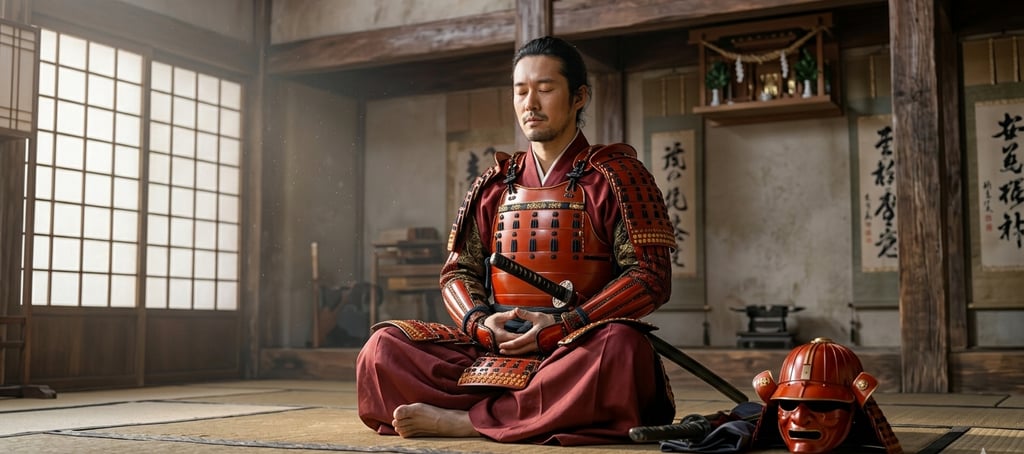
The Japanese concept of Mushin, the state of mind free from distraction and self consciousness, is not mysticism. It is the optimal neurological state for performance. And it is available to anyone willing to train for it.
5. Who You Become Matters More Than What You Can Do
Here is the deepest truth about martial arts that takes most practitioners years to fully understand.
The techniques are not the point.
They are the vehicle. The method. The means by which the art delivers something far more significant than fighting ability, character, resilience, discipline, the capacity to meet difficulty with composure and to keep going when everything in you wants to stop.
The martial artist who trains only the body is missing the most important part of the curriculum.
The Dojang Mind — the warrior mindset applied to every area of life — is what the greatest martial arts traditions have always been pointing at.
Your mind is the dojang. And the training never stops.
If this post has made you want to dive deeper into the warrior mind — these three books are the perfect place to start:
Mind Over Muscle — Jigoro Kano
The founder of Judo shares the philosophy behind one of the world's most respected martial arts. This is not a technical manual, it is a profound exploration of how physical training develops mental and moral character. Essential reading for any serious martial artist who wants to understand what their training is truly for.
Available on Amazon. Buy Now
The Unfettered Mind — Takuan Soho
Written by a Zen Buddhist monk for a famous samurai, this short but profound book explores the relationship between the mind and martial performance. Directly relevant to presence and Mushin.
Available on Amazon. View now
Zen Mind, Beginner's Mind — Shunryu Suzuki
One of the most influential books on mindfulness and presence ever written. Suzuki's gentle, profound teaching on approaching every moment with openness and curiosity, the mind of a beginner — is directly applicable to martial arts training and to life. A book that rewards every re-read.
Available on Amazon. View Now
This post contains affiliate links. Please read the Affiliate Disclosure for full details.