
Have you ever landed your best technique in sparring and in that split second, left yourself completely open?
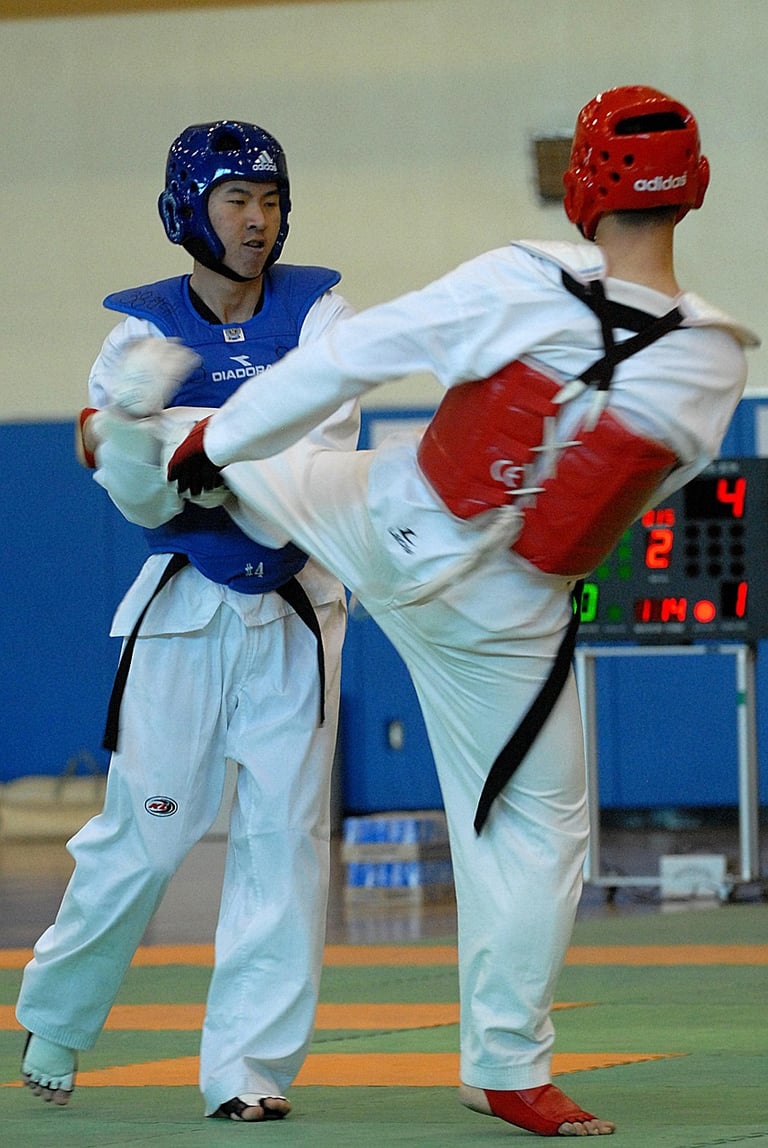
It happens to every martial artist at some point, I know its happened to me.
You execute a clean combination. Your technique lands exactly as trained. And for just a fraction of a second, a barely perceptible moment of internal collaberation, your mind switches off.
That fraction of a second is all it takes.
Your partner counters. You didn't see it coming. Not because you lack skill or fitness or dedication. But because in that tiny window between action and recovery, your mind had already left the Dojang.
This is one of the most common and most costly weaknesses in martial arts training, but there is an ancient Japanese concept that addresses it directly.
Zanshin.
What Zanshin Is, And Why Every Martial Artist Needs It
Zanshin, 残心 translates as remaining mind or lingering awareness.
It is the quality of mental presence that continues after a technique is executed. The awareness that does not collapse the moment the pressure lifts. The mind that stays switched on, calm, watchful and ready, even when the body has just done something it is proud of.
In traditional Japanese martial arts, Zanshin is not considered an advanced concept. It is considered a fundamental one. It is taught early because experienced practitioners know something that newer students learn the hard way:
The split second after your technique is the moment you are most vulnerable.
And it is the moment most martial artists are least prepared for.
The Pain Points Zanshin Solves
If any of this sound familiar, Zanshin is what you need to develop:
You get caught by counters after landing techniques. Your attack succeeds but your guard drops in the aftermath. Your opponent reads that window and exploits it every time.
Your grading performance drops at the end of combinations. Your techniques are strong individually but your examiner notices that your focus fades between them. The transitions between movements reveal a mind that is running on autopilot.
You lose concentration after a successful exchange. You land something good in sparring and the satisfaction of it takes you mentally out of the round, sometimes for just a second, sometimes longer.
You struggle to stay present under sustained pressure. When a session gets hard your mind looks for the exit. You are physically there but mentally you have already started winding down before the session is over.
All of these are Zanshin problems. And all of them are trainable.
How to Develop Zanshin in the Dojo / Dojang
The good news is that Zanshin is not a talent you either have or don't have. It is a skill. It is built through deliberate, consistent practice, the same way every other martial arts skill is built.
Train the moment after the technique. When drilling combinations, do not stop your mental focus when the final technique lands. Deliberately hold your guard, maintain your eye contact and stay present for three full seconds after the combination ends. Even i board breaking, I see so many break a board with a kick or a punch then just drop thier hands, clump thier sholders and walk away like they are having a strol in the park. Make the aftermath part of the drill, not an afterthought.
Use sparring to practise recovery awareness. After landing a technique in sparring, consciously check in. Where is your guard? Where is your partner? Where is your mind? This single habit, practised consistently, begins to rewire your automatic response to success from relaxation to readiness.
Hold your form. In kata and drilling, never let your posture or focus drop before you have consciously decided the movement is complete. The discipline of maintaining form after execution trains the mind to stay present long after the body has finished acting.
Practise stillness between combinations. Rather than rushing to the next technique or resetting on autopilot, pause deliberately. One breath. Full awareness. Then move. That pause is Zanshin in its simplest form.
The Deeper Application
What makes Zanshin so powerful is that it transfers far beyond the training floor.
The martial artist who develops genuine Zanshin, who trains the mind to remain present and aware after every significant action, finds that quality showing up everywhere.
In the difficult conversation held with full attention from beginning to end. In the work project seen through completely rather than mentally abandoned before it is finished. In the relationship given full presence rather than distracted half-attention.
Zanshin is not just about what happens after your technique lands.
It is about what happens after every important moment in your life.
The mind that stays. The awareness that lingers. The presence that does not leave just because the obvious action is over.
That is the warrior mind applied to the whole of life.
And it begins on the mat, in the three seconds after your best technique lands, when most martial artists switch off and the ones developing Zanshin stay switched on.
Ready to Go Deeper?
If Zanshin has resonated with you, the books below explore the Japanese warrior mind in depth, from the philosophy of presence and awareness to the practical application of these concepts in martial arts and everyday life.
Each one is worth your time.
Click the links below to explore and purchase:
Zanshin: Meditation and the Mind in Modern Martial Arts by Vince Morris This book looks at the importance and application of Zanshin or calm concentrated awareness in the practice of martial arts. It examines the mind-training methods of contemporary martial arts masters, transcendental and Zen meditation techniques, and how to combine meditation with physical practice. Perfect for this post, it is literally about Zanshin.
Availible on amazon: View Now
The Book of Five Rings by Miyamoto Musashi A definitive interpretation of Miyamoto Musashi's classic book of strategy. The most famous samurai philosophy book ever written, essential reading for any serious martial artist and highly relevant to presence and awareness.
Availible on Amazon: View Now
Zen in the Art of Archery by Eugen Herrigel This is particularly relevant to your post because it tells the story of a Western professor who trained in Kyudo, Japanese archery, under a legendary master. For the first four years of his training, Herrigel was only allowed to shoot at a roll of straw just seven feet away. When Herrigel complained of the incredibly slow pace, his teacher replied, "The way to the goal is not to be measured." Beautifully aligned with the Zanshin message.
availible on Amazon: View Now
Because the technique is only the beginning.
What you do with your mind in the moment after, that is where mastery lives.
Each one of these books is a genuine investment in your martial arts journey, on and off the mat.
I hope this post is helpful to you in some way and you enjoyed reading it.
Regards Tony Davies
This post contains affiliate links. Please read our Affiliate Disclosure for full details.