
Why the Dojo Does Something to Your Brain That Nothing Else Can? Mushin and the third space…
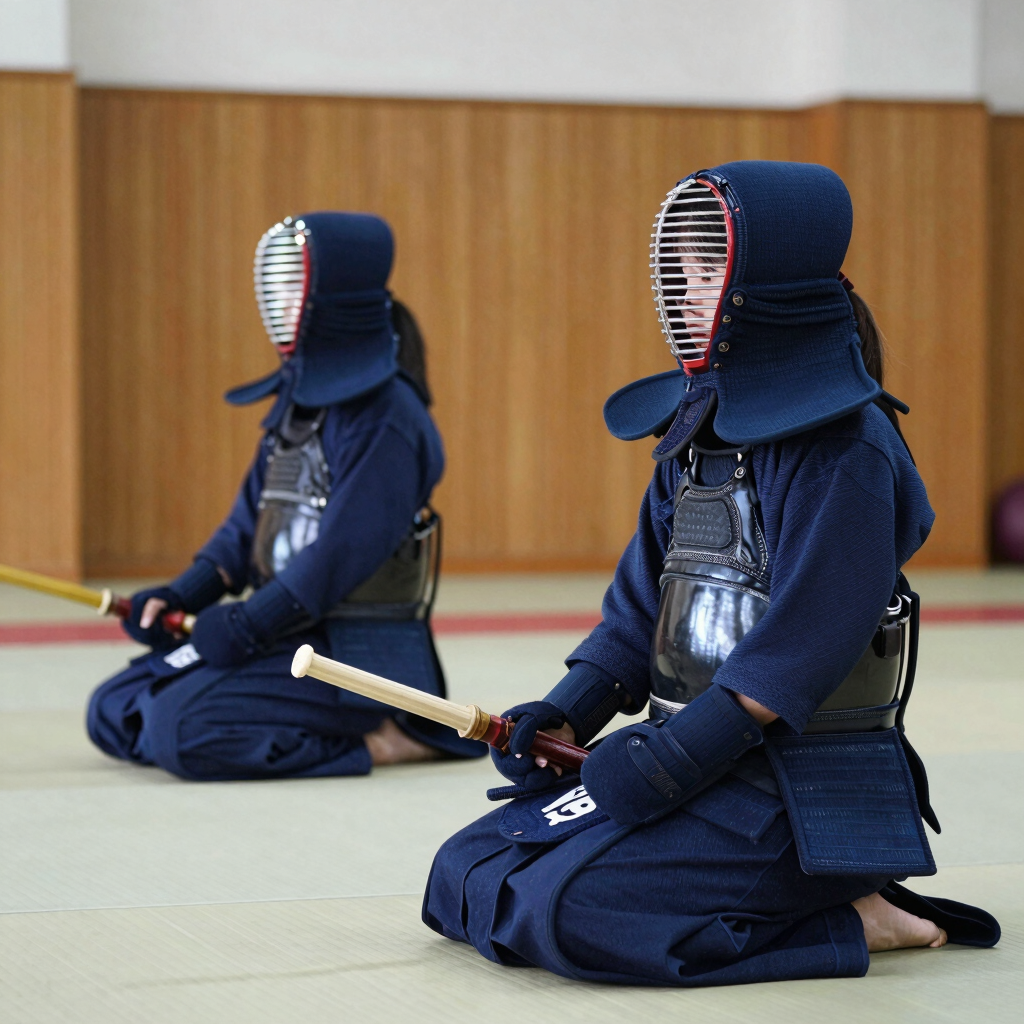
Have you ever noticed that the moment you step onto the dojo floor, something shifts?
The overdue report you've been stressing about, the argument you had over breakfast, the thousand little things pulling at your attention, they just... fade away. You might have assumed it's simply because you're busy trying not to get hit. But it goes much deeper than that. What's happening is a very real, very measurable shift inside your brain. And once you understand it, you'll never look at your training the same way again.
Let's talk about two ideas that can genuinely transform the way you train: the concept of the Third Space and the ancient martial arts principle of Mushin.
The Two Spaces and the One We're Missing
Most of us move through life in two primary spaces. The first is Home, the place of family, rest, and connection. The second is Work, the place of deadlines, pressure, and performance. We spend our entire lives bouncing back and forth between these two worlds, and here's the problem: our brains aren't designed to switch instantly between them.
Think about the last time you had a rough day at work. Did you sit in the car for a few minutes before going inside? Did you stare at the ceiling before walking through the front door? That's not laziness, that's your brain desperately searching for a transition. It needs a moment to shift gears, to shed the identity it wore all day before stepping into a completely different one. When we don't give it that transition time, we drag the stress, the short temper, and the distracted mind straight into our home life. The "work version" of us ends up at the dinner table.
This is where the concept of the Third Space becomes so powerful. The dojo isn't just a gym. It's a completely separate world, one with its own rules, its own rituals, and its own identity. When you bow and step onto the mat, your brain receives a clear and unmistakable signal: this is different. The training hall acts as a psychological buffer zone between the two worlds of your life, a place where neither version of you, the stressed worker nor the tired parent, has to show up. You just must be a martial artist.
Ask yourself honestly: how often do you carry the tension from one part of your life into the next? What would it mean to have a physical space, a real ritual, where that tension was simply not allowed to follow you in?
What Is Mushin — And Why Should You Care?
In Japanese martial arts, there is a concept called Mushin no shin, which translates roughly as "mind without mind." You've probably felt a version of it without knowing what to call it. It's that moment in sparring when your body moves before your brain has time to think. A counter happens. A block appears. Your foot finds exactly the right position and you had absolutely nothing to do with it consciously. Athletes from every sport call it being "in the zone." Scientists call it something slightly less poetic, but no less fascinating.
To understand what's happening, let's take a quick, simple tour of the brain, no medical degree required.
Most of us spend our days living in our Prefrontal Cortex. Think of this as the "boardroom" of your brain. It handles planning, decision-making, self-criticism, and worrying about the future. It's incredibly useful in daily life, but on the mat, it's your worst enemy. It's the voice that says "that was wrong, your stance is off, what if I mess this up, everyone is watching..." The Prefrontal Cortex is the inner critic, and it never stops talking.
But here's where things get interesting. When you train consistently and achieve a state of real flow, your brain does something remarkable, it essentially powers down that overcrowded boardroom and hands control to two much older, much more instinctual parts of the brain: the Basal Ganglia and the Cerebellum.
In plain terms: the Basal Ganglia is where your deeply learned habits and automated movements are stored. When you've drilled a technique hundreds of times, it lives there. The Cerebellum handles your body's coordination, timing, and spatial awareness. Together, when they take over from the Prefrontal Cortex, your movement becomes fluid, fast, and instinctual. There is no hesitation because there is no deliberation. Your body simply knows.
Neuroscientists have a term for this process: Transient Hypofrontality. It sounds complicated but break it down and it's beautifully simple. "Transient" means temporary. "Hypo" means reduced. "Frontality" refers to the Prefrontal Cortex, the boardroom. So Transient Hypo frontality just means: your inner critic temporarily goes quiet. And when it does, your inner warrior gets to come out and play.
This is Mushin. Not mysticism. Not magic. It's your brain functioning at its most efficient, most instinctual, most present state.
The Dojo as a Reset Button for Your Nervous System
Now bring these two ideas together, and something remarkable emerges. The dojo is not just a place to build fitness or learn to fight. It is, in a very real neurological sense, a reset button for your entire nervous system.
All day long, your Prefrontal Cortex is working overtime. Emails, problems to solve, emotions to manage, judgments to make. By the time most people finish work, that part of the brain is running on fumes, yet it keeps going, because there's no signal to stop. There's no clear instruction that says, "the day is over."
The ritual of stepping onto the mat gives your brain exactly that instruction.
When you bow in, when you tie your belt, when you line up and the class begins — these aren't just traditions. They are neurological cues, telling your brain to shift its operational mode. You are moving from a state of analytical thinking into a state of physical presence and flow. And as training progresses, as your heart rate rises and your focus narrows to what is right in front of you, the Prefrontal Cortex steps back. The boardroom empties. The committee stops arguing.
And for one glorious hour, you are here. Fully, completely, undistractedly here.
Making It Intentional: The Ritual is the Point
Once you understand all of this, training becomes about far more than technique. It becomes about the transition. The walk to the dojo, the changing of clothes, the tying of the belt these are not inconveniences before the "real" training begins. They are the training, in a sense. They are the rituals that prepare your brain to enter a different state.
Try this the next time you train. As you tie your belt, be deliberate about it. Feel each fold. Breathe slowly. Tell yourself, silently or out loud,that everything outside these walls can wait. The knots in your belt represent, in a small but real way, the mental noise being tied off and set aside. It sounds simple because it is. But simple is not the same as trivial.
Over time, these rituals build a Pavlovian response. Your brain learns: when I tie this belt, the other stuff stops. The Third Space becomes more effective each time you use it. And the path to Mushin — to that effortless, flowing, present state — becomes shorter and more reliable
Two Books to Take You Deeper
If this has sparked your curiosity, these three books are outstanding companions on this journey:
"Zen in the Martial Arts" by Joe Hyams is a warm, story-driven read that captures exactly how the dojo changes a person's character over time. Perfect for any level.
Available at Amazon: View Now
"Flow: The Psychology of Optimal Experience" by Mihaly Csikszentmihályi is the foundational text on everything we've discussed today, the science of being fully present, written in a way anyone can understand.
Available at Amazon: View Now
The Dojo is waiting. And it's offering you something that no amount of scrolling, planning, or worrying ever will: the gift of being completely, utterly, peacefully present.
So tie your belt. Step forward. And leave everything else at the door.
This post contains affiliate links. Please read our Affiliate Disclosure for full details.